
Broken Bone Repair: Understanding Open Reduction and Internal Fixation Surgery London
Overview
If your bone has been broken and cannot be treated with a cast or splint, you may need to undergo Open Reduction internal fixation Surgery(ORIF).
What is (ORIF)?
ORIF is a surgery that realigns the bones that have been broken and then stabilise them. It’s especially useful for the following:
- Displaced fracture – The broken pieces of bone are not lined up.
- Unstable fractures: Those individuals who are having difficulties in movement and are not healing.
- Joint fractures – Fractures that affect the stability of the joints.
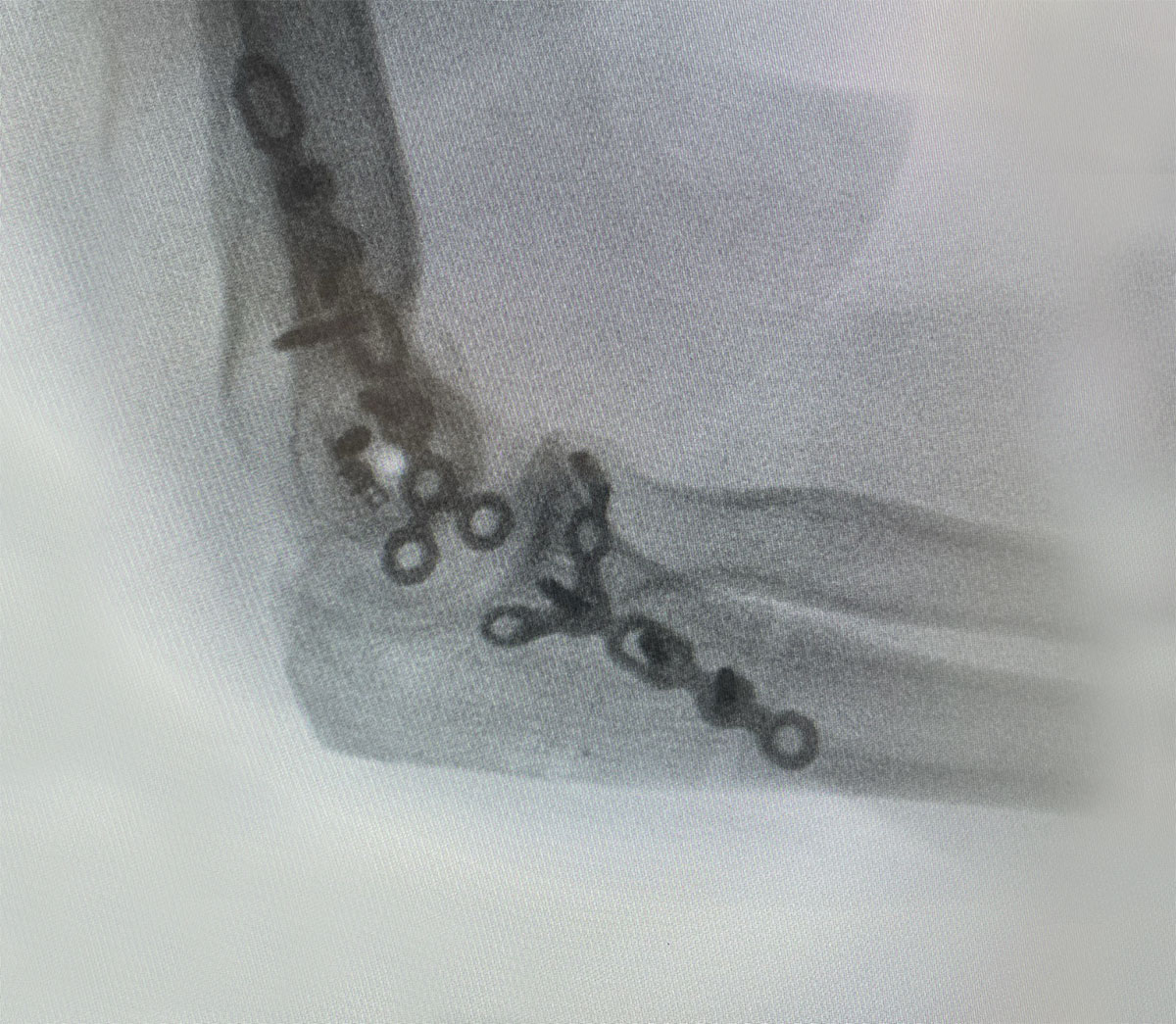
Understanding the Humerus:
The humerus is the upper arm bone, and fractures can occur in various sections: near the shoulder, middle portion, or close to the elbow.
How Does ORIF Work?
- Open Reduction: The surgeon makes an incision to expose the broken bone and then carefully repositions (reduces) the broken pieces (fracture reduction) to their original position.
- Internal Fixation: The bones are realigned and held in place with mechanical support such as plates, screws, or pins that are normally made from stainless steel or titanium and are biocompatible.
When is ORIF Required?
Your surgeon may advise you to have Open Reduction internal fixation Surgery for one or more of the following situation:
- Multiple fractures: When the bone is broken in several place.
- Displaced fractures: When the pieces of bone are not properly lined up.
- Open fractures: When the broken bone is visible outside the skin.
- Improper healed fractures: When previous fracture or non-surgical treatments have not been successful.
Benefits of ORIF
- Reduced pain: ORIF helps stabilise the fracture, reducing pain & discomfort.
- Improved healing: ORIF helps in proper healing by aligning the bone fragments accurately.
- Restored mobility: ORIF surgery helps restore normal movement and function in the affected part.
External Fixators
In some cases, with severe injuries affecting the skin and muscle around the fracture, an external fixator might be used temporarily. It involves pins or screws that are inserted into the bone through small incisions and connected with a bar outside the skin to keep the fragments in place until they are either internally fixed or healed themselves to have adequate stability.
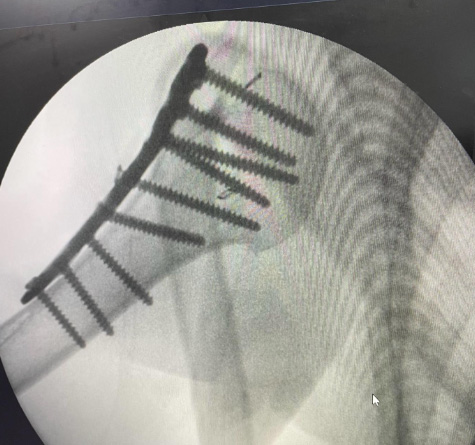
Proximal Humerus Fracture
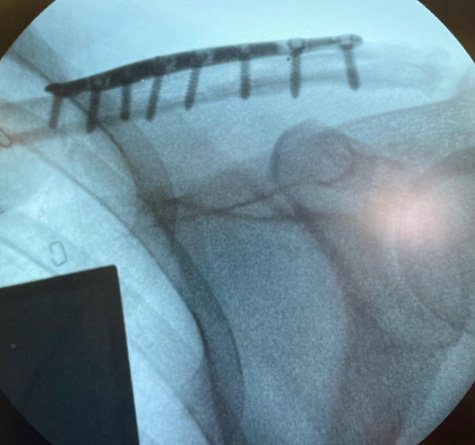
Clavicle Plating
Known Complications of ORIF
Very rarely, the following complications may be seen with Open reduction internal fixation surgery:
- Problems with implants: Screws or plates have broken or become loose.
- Infection: There is a risk of infection, as with any surgery.
- Bleeding: There can be bleeding during or after the procedure.
- Nerve injury: A nerve can be accidentally injured during surgery.
- Avascular necrosis: Interruption of blood supply to the bone.
- Stiffness or weakness: Restricted range of motion or muscle weakness may result.
- Non-union: In the rare instance that a fracture might not adequately heal and you may need additional surgery.
After ORIF Surgery Care
- Pain management: You’ll be given medication after your surgery to relieve pain.
- Immobilization: The affected area will be immobilized in a splint or sling for a few weeks to heal.
- Physio therapy: Recommended physio therapy will be important to strengthen, increase flexibility and regain full range of motion of affected area.
- Follow-up visits: You will need to regularly have a follow-up visit to monitor the healing and to have stitches or staples taken out (if any).
Most individuals can return to their normal activities after open reduction internal fixation surgery. Within a few months with proper care and adherence to their doctor’s recommendations, they can feel much better.
Remember:
This information is not a substitute for professional medical advice. If you have any questions or concerns, consult your healthcare provider.